


AI Isn’t Replacing Expertise. It’s Exposing the Lack of It.

Right now, AI is the most talked-about force in business. It is rewriting job descriptions, disrupting industries, and making it possible to produce in hours what used to take weeks. For a lot of people, that sounds exciting. For others, it sounds terrifying. But here is what most of the conversation is missing entirely:
AI is making execution easier, but it’s exposing skill gaps more than ever.
Ask AI to write code, create a marketing plan, generate a sales funnel, or design a brand, and it will give you something that looks convincing. If you already understand these domains, AI saves you time and helps you think bigger and faster. But if you don’t understand them at all, AI becomes a mirror — reflecting back your own blind spots, assumptions, and missing logic.
This is why some people feel empowered by AI, while others get stuck.

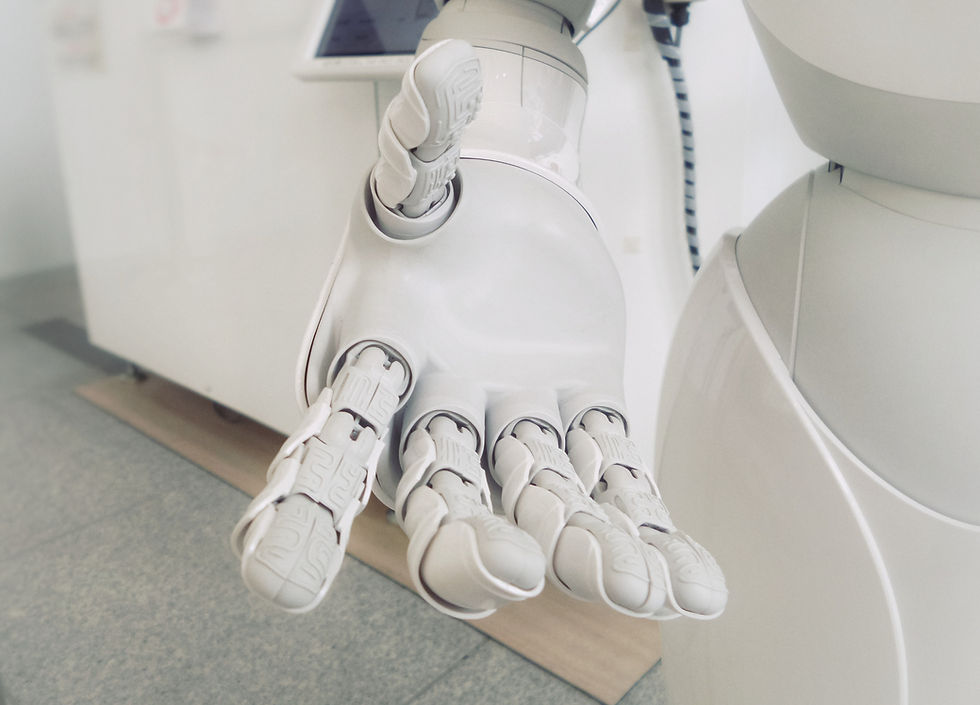
Poto: Cottonbro (Pexels)
The difference is experience.
When you understand your craft, AI extends your reach. When you don’t, AI produces output that looks useful but collapses when you try to use it.
The misconception that AI can replace specialists is not only inaccurate — it’s dangerous. It leads to shallow strategies, unrealistic expectations, and a flood of businesses thinking they’re building something solid, when in reality they’re stacking blocks on top of sand.
Let’s explore why AI needs human expertise to create anything meaningful, and why it becomes a force multiplier only when guided by someone who knows what they’re doing.
AI Is Impressive, But It Doesn’t Replace Human Understanding
AI can generate ideas faster than any human. It can summarise, expand, rephrase, analyse patterns, and give you endless “inspiration.” But none of that matters if you don’t understand how to evaluate the output. That is the missing link. AI can do the work — it cannot judge its own work.
People confuse volume with validity. They assume that because AI can produce many things, it must also understand what makes those things effective. But understanding comes from lived experience, pattern recognition, trial and error, education, and critical thinking — attributes AI does not possess.
This gap is where unrealistic expectations begin.
AI can copy format, but not the instinct behind it
Ask AI to write a sales message and you’ll get something that looks sharp. But if you’ve actually sold anything before, you’ll notice the message has no sense of timing, no nuance, and no understanding of the emotional temperature of a buyer. Strategy is built on instinct — noticing when something feels off, or when a message is too soon, too soft, too long, too generic, or completely misaligned.
AI doesn’t sense those subtleties. It recreates the shape of an answer. Experts recognise that difference immediately. Beginners do not, which is why they assume the AI-generated message is correct, simply because it “sounds professional.”
AI repeats patterns from the internet, not experience
Everything AI generates is based on patterns it has observed. But the internet is flooded with mediocre advice, rehashed content, and frameworks removed from context. When AI pulls from that chaotic pool, it can’t separate what works from what sounds nice. It simply repeats.
Experts read AI’s suggestions and filter them instantly. They keep what fits, tweak what doesn’t, and discard what’s irrelevant. Non-experts accept everything as truth, because they don’t know which parts matter. This is why AI cannot replace expertise — you need expertise to separate what’s valuable from what’s filler.
AI cannot replace the ability to diagnose problems
A strategy is not about generating ideas. It’s about identifying what’s broken. AI has no sense of priorities. It doesn’t know which part of your funnel is weak. It doesn’t know why people aren’t converting. It doesn’t know what’s blocking your brand from growing. It can give you content ideas for days, but it cannot diagnose your commercial reality.
Experts diagnose before they create. Beginners skip straight to creation, expecting the output to carry the weight of a plan. AI can describe symptoms — only human expertise can interpret causes.
Why Expertise Still Matters More Than Ever
There’s a growing assumption that AI can replace specialists because it can produce the same deliverables. Need a design? AI can create one. Need a blog? AI can draft one. Need a strategy? AI can outline one. The problem isn’t the output, it’s the intention behind the output.
Marketing, sales, design and coding aren’t just about producing things. They’re about understanding systems. The deeper knowledge behind the work still matters, and AI has no access to that depth.
AI cannot replace the structured thinking you learn through education and experience
This is where formal training actually matters. Education teaches you how to think — not what to think. A Bachelor or Masters gives frameworks, research skills, logic, critical analysis, and evaluation. These are not things AI gains through training; they are things humans build through challenge, practice and feedback.
The reason professionals use AI effectively is because they bring their foundation with them. They know what questions to ask, and what to ignore. AI doesn’t replace that foundation. It becomes powerful because of it.
AI cannot replace commercial awareness
Businesses don’t grow because content looks nice. They grow because decisions are made based on market behaviour, revenue goals, timing, and constraints. AI doesn’t understand constraints. It doesn’t understand urgency. It doesn’t understand the cost of a missed opportunity. It doesn’t understand pressure on a sales target.
Experts understand the stakes. They understand that strategy is built on reality, not on ideal scenarios. AI-generated plans often assume everything will follow the perfect linear path. Real markets don’t work like that and that’s where expertise becomes irreplaceable.
AI doesn’t feel the consequences of being wrong, you do!
One of the most overlooked aspects of expertise is accountability. When an expert builds a strategy, they carry the responsibility for outcomes. They evaluate, adjust, refine, challenge assumptions and correct course quickly. AI never feels that pressure. It doesn’t care if a plan works or not. It doesn’t have intuition, reputation, ethics or consequences.
Experts navigate results. AI navigates text.
That alone proves it cannot replace human judgement.
How AI Amplifies Experts Instead of Replacing Them
Now let’s shift away from what AI cannot do and focus on what it does beautifully, when guided by experience. For people who actually understand their field, AI doesn’t replace their knowledge; it multiplies it.
AI is powerful when it operates inside the boundaries set by someone who knows the landscape.
AI speeds up execution so experts can focus on strategy
Experienced marketers, sales professionals and designers don’t waste energy on repetitive tasks. They use AI to draft, refine, shorten, expand, and iterate faster. Instead of spending two hours brainstorming a concept, they generate ten ideas with AI and refine the strongest one. Instead of writing a first draft from scratch, they shape AI’s draft into something meaningful.
The expertise lies in the selection, refinement and integration and not in the typing.
AI helps experts challenge their own thinking
One of the strengths of AI is its ability to generate angles you may not immediately consider. For experts, this is incredibly useful. They use AI to pressure-test assumptions, explore alternative approaches, or gather perspectives they can evaluate through their own filter. This makes strategies richer, not flatter.
But here’s the catch: you can only evaluate alternatives when you understand the field deeply. Otherwise, you can’t tell the difference between an interesting idea and a completely misguided one.
AI accelerates output but cannot decide direction
Experts decide the route. AI boosts the speed. This combination allows experts to produce more, test more, and adapt more quickly. It’s the equivalent of having a fast assistant who never gets tired. But assistants don’t lead. Experts do.
AI becomes a powerful extension of your judgement, not a replacement for it. That’s the distinction people often miss.
The Danger of Thinking AI Makes Everyone a Strategist
The biggest misconception circulating right now is that AI makes everyone a marketer, strategist, designer or developer. The truth is more uncomfortable: AI makes inexperienced people feel more capable than they are. It gives a false sense of certainty.
You can’t ask AI to write a solid strategy if you’ve never operated one.
You can’t ask AI to generate a sales plan if you’ve never closed deals.
You can’t ask AI to create SEO direction if you don’t understand technical architecture.
You can’t ask AI to write code safely if you don’t understand back-end logic.
Using AI without expertise is like driving a fast car without knowing how to steer.
AI makes beginners look advanced, until results prove otherwise
This is why so many AI-generated strategies sound amazing but collapse in real-world execution. They look solid, they feel structured, but they rest on assumptions instead of insight. When results don’t appear, people blame the market, the platform, the audience — anything except the fact that the plan was thin to begin with.
AI gives you the impression of momentum, not actual momentum.
The gap between execution and understanding becomes painfully visible
People using AI without expertise often deliver polished work that falls apart under pressure. They create funnels that don’t convert, SEO plans that ignore technical requirements, content calendars without any commercial logic, and messaging that doesn’t align with audience behaviour.
Experts see immediately what’s missing.
Clients see it only when results don’t show up.
You need expertise to even recognise when AI is wrong
This is the paradox. Only people with experience can tell when AI is hallucinating, pulling irrelevant patterns, or suggesting something that breaks logic. Without that experience, you accept everything as fact. And that’s exactly how poor plans get shipped into the world as if they were strategy.
AI isn’t replacing experts.
Experts are replacing the need for mediocre work by using AI effectively.
How to Use AI Properly. So You Actually Create Results.
The goal of AI should never be to replace thinking. It should be to enhance output once the thinking is done. When used correctly, AI becomes a partner — not a crutch. It supports, accelerates and expands your work rather than trying to do the work for you.
Start with expertise, then let AI build around it
The foundation always has to come from you: your judgement, your understanding, your experience, your interpretation of goals and your sense of what works. Once you have that baseline, AI becomes incredibly useful for generating drafts, variations and alternatives that you refine accordingly.
The combination of expert knowledge and AI speed creates outcomes neither could produce alone.
Don’t outsource decisions to AI, outsource execution.
AI is great for drafting, summarising, rewriting, generating concepts and exploring variations. But it cannot tell you what direction to pursue, which risks to take, or how to sequence actions. Those decisions require human judgement.
Use AI for momentum. Keep decisions in your hands.
The right way to integrate AI into your marketing workflow
AI fits beautifully into:
first drafts of content
sales message variations
SEO idea generation
research summaries
creative brainstorming
ad copy variations
outlines and structures
finding angles you might overlook
But AI should not define:
your brand position
your funnel structure
your targeting
your sales approach
your strategic roadmap
your messaging hierarchy
your positioning logic
Those belong to the expert.
Conclusion: AI Isn’t Replacing Expertise. It’s Exposing the Lack of It.
AI is one of the most transformative tools of our generation, but it doesn’t replace the fundamentals of strategy, creativity, psychology, or commercial thinking. If anything, it makes those fundamentals even more visible because when they’re missing, the output collapses.
Experts who use AI become faster, sharper and more effective. People without expertise simply produce more content that goes nowhere. AI doesn’t eliminate the need for experience.
It multiplies the value of those who have it. And that’s the real story behind the AI revolution is not that it replaces experts, but that it elevates them.
Does AI replace human expertise?
No. AI replaces repetitive tasks and speeds up execution, but it cannot replace the judgement, diagnosis, and strategic thinking that come from real experience. When an expert uses AI, the output is sharper and more effective. When someone without the underlying knowledge uses it, the output looks convincing but falls apart in practice. AI amplifies what you already know. It cannot build what you don't have.
Why do experts get better results from AI than beginners?
Because using AI effectively requires the ability to evaluate the output. Experts know which parts of an AI-generated draft are useful, which need reshaping, and which should be discarded entirely. They ask better questions, apply tighter filters, and integrate AI into a broader strategic framework. Beginners accept everything at face value because they don't yet have the reference points to challenge it. The tool is the same, the difference is the person holding it.
Can AI replace a marketing strategist?
Not in any meaningful way. AI can generate ideas, draft copy, and suggest structures. But it cannot identify why a funnel is failing, why a brand isn't resonating, or where a commercial opportunity is being missed. Marketing strategy requires commercial awareness, human psychology, and the ability to read situations that AI simply doesn't have access to. AI supports the strategist. It doesn't replace the thinking.
What skills are most important in an AI-powered world?
The skills that matter most are the ones AI cannot replicate: critical thinking, commercial awareness, creative judgement, communication, and the ability to diagnose problems before solving them. These come from education, experience, and accumulated pattern recognition. The more AI handles execution, the more valuable genuine strategic and creative thinking becomes. Expertise doesn't lose relevance in an AI world, it gains it.
How should businesses use AI in their marketing?
Use AI to speed up execution, not to replace strategy. Start with a clear brief built on real insight into your audience, your offer, and your goals. Then use AI to generate drafts, test variations, and accelerate content production. Always apply expert review before publishing. AI works best inside a well-defined strategic framework, not as a substitute for one. If you wouldn't trust an intern to make final strategic decisions, don't let AI do it either.
Is it dangerous to rely on AI without understanding marketing?
Yes, and more so than people realise. AI generates output that looks polished and professional, which creates a false sense of confidence. Strategies that look solid on paper often collapse in execution because they lack the commercial logic, audience understanding, and sequencing that only comes with experience. Using AI without expertise doesn't just produce mediocre results. It can produce actively misleading plans that cost real money and time to unwind.
What is the right way to integrate AI into a business strategy?
Think of AI as a highly capable assistant that never sleeps, never complains, and has read almost everything ever written, but has never run a business, managed a client, or felt the pressure of a missed target. Use it for drafting, summarising, generating alternatives, and accelerating production. Keep decisions, direction, and strategy firmly in human hands. The businesses that win with AI are not the ones who use it the most. They are the ones who use it the most intelligently.




Comments